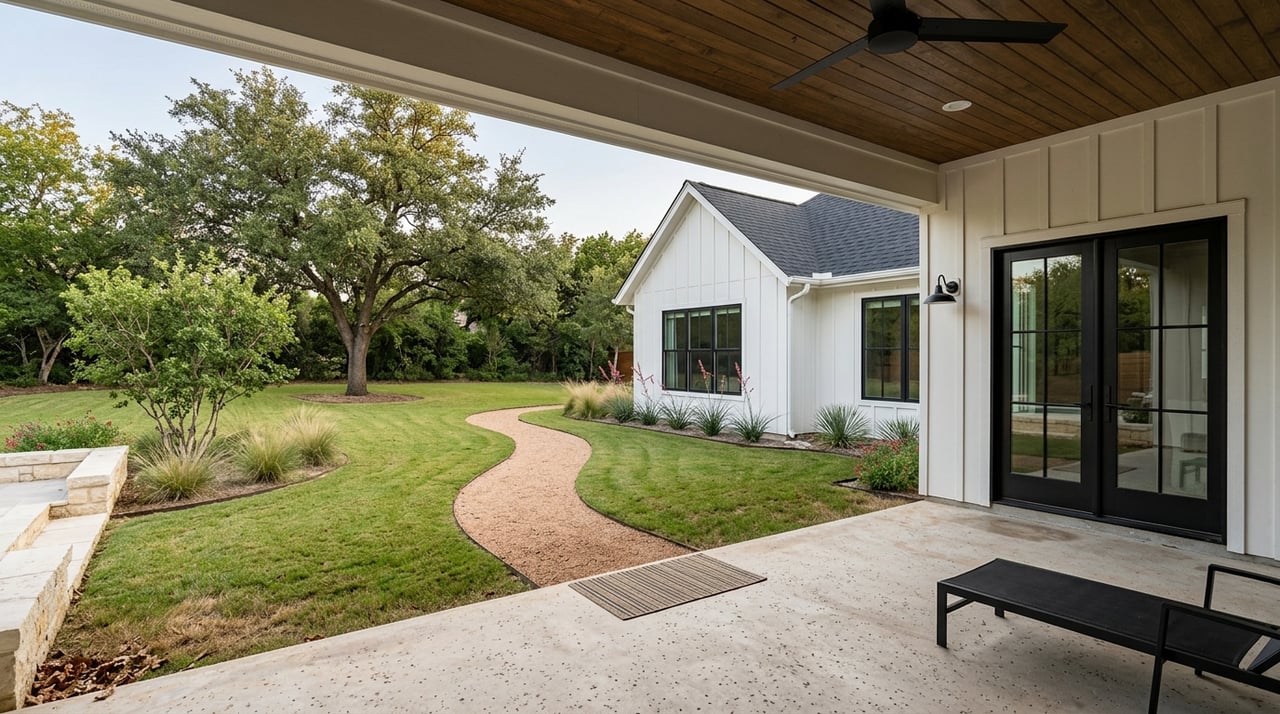
Buying in Timberwood Park: Key Details to Verify
June 18, 2026
June 18, 2026
If you are thinking about buying in Timberwood Park, you are probably looking for more than just a house. You may want more space, a quieter setting, and a neighborhood that feels a little removed from the city without being too far from daily essentials. The key is knowing that Timberwood Park has a few details buyers should verify before they fall in love with a property. Let’s dive in.
Timberwood Park is an unincorporated suburban residential community in north-central Bexar County, about twenty miles north of San Antonio. It sits west of U.S. 281 and east of Blanco Road, which gives it a north-side location many buyers consider when comparing suburban and Hill Country-style living.
A big part of the appeal is the setting itself. The development has been described as a 2,172-acre community with 3,263 lots, and many of those lots are about half an acre. If you are moving from a smaller-lot neighborhood, that extra space can feel like a major upgrade.
The area also reflects a strong owner-occupant profile. According to 2019-2023 American Community Survey data, 84.8% of homes are owner-occupied, average household size is 3.06 people, median household income is $147,471, and the median value of owner-occupied homes is $469,900. Those numbers help paint a picture of the local housing profile, but your home search should still focus on the specific property and your own goals.
One of the biggest things to understand about Timberwood Park is that you are not just buying a home. In many cases, you are buying into a larger-lot lifestyle. That can mean more privacy, mature oak trees, wildlife, and room to spread out.
It can also mean more exterior upkeep. A larger yard often brings more mowing, trimming, and general maintenance than you would expect in a standard small-lot subdivision. If you love the idea of space and natural surroundings, that tradeoff may be well worth it.
The HOA describes the original development as a custom-home setting with half-acre or larger lots, county-managed country roads, and a private common park of about 30 acres. Amenities include a 7-acre stocked lake, a six-hole golf course, tennis, basketball and volleyball courts, a junior Olympic pool, a splash pad, walking trails, a pavilion, a clubhouse, and neighborhood events.
For many buyers, those amenities are a major draw. Still, you should confirm whether the property you are considering actually includes access to them.
This is one of the most important details for buyers. Not every property using the Timberwood Park name is part of the original Timberwood Park Development.
The HOA states that some surrounding neighborhoods now use the Timberwood Park Area name even though they were not included in the original non-annexation agreement. It also notes that newer surrounding areas added after 2007 were often excluded. That matters because private park access is limited to owners in the Timberwood Park Development.
In practical terms, two homes with a Timberwood Park mailing identity may not offer the same ownership experience. Before you make an offer, ask whether the property is inside the original development or simply in the broader area.
If neighborhood amenities are part of your decision, verify them early. A listing description or informal local reference may not tell the full story.
Ask for confirmation on private park access, HOA membership, and any unit-specific restrictions tied to the property. The HOA documents indicate that covenants and restrictions can vary by unit, which means the rules may not be identical from one section to another.
This step can save you from surprises later. It is especially important if you are buying because you want access to the lake, pool, trails, sports courts, or clubhouse.
Timberwood Park has a local planning detail that deserves extra attention. The City of San Antonio lists an Agreement for Services in Lieu of Annexation for the Timberwood Park Area, and a 2017 City Council ordinance states that the non-annexation agreement expires in 2033.
At the same time, the HOA states that the neighborhood has no city property taxes into 2032. Because those sources use different end-year language, the safest move is to verify the status of the specific parcel rather than assume every property in the ZIP code follows one timeline.
For you as a buyer, that means asking clear questions during due diligence. You will want to understand the parcel’s current annexation status, any related tax implications, and whether that status could affect your long-term ownership costs.
If you plan to make changes after closing, do your homework before you buy. The HOA documents say that most improvements require Architectural Control Committee approval.
The same materials also state that, under the non-annexation agreement, City of San Antonio building permit approval is required. If you are thinking about projects like exterior upgrades, additions, or other visible improvements, those approval steps should be part of your planning.
This does not have to be a deal breaker. It just means you should match the property to your plans and make sure you understand the process ahead of time.
On a map, Timberwood Park may not seem too far from central work and lifestyle hubs. In real life, commute feel can be different from map distance.
The Census reports a mean travel time to work of 31.2 minutes for the Timberwood Park CDP. That number offers useful context, especially if you are deciding between Timberwood Park and a closer-in suburb.
If commute balance matters to you, test your actual drive during peak hours. Try your likely route in the morning and late afternoon so you can judge the routine based on real traffic patterns, not just a navigation estimate.
For buyers who want to understand school zoning, Comal ISD attendance-zone information includes Timberwood Park Elementary, Pieper Ranch Middle, and Pieper High as part of the local feeder pattern referenced in district communications.
Those campuses are located in San Antonio 78260 at 26715 S Glenrose, 1106 Kinder Parkway, and 1400 Kinder Parkway. Even so, attendance boundaries can change, and school assignment should always be confirmed directly during your home search.
A clear school-zone check is especially useful when you are comparing multiple homes in or around the broader Timberwood Park area. It helps make sure the home you choose aligns with the location details that matter most to your household.
Larger lots are one of Timberwood Park’s biggest selling points, but they are not for everyone. More land can create a stronger sense of space and separation between homes, which many buyers value.
At the same time, more land usually means more responsibility. Tree care, yard maintenance, drainage awareness, and exterior upkeep can all take more time and budget than in a smaller planned neighborhood.
A good question to ask yourself is simple: do you want the feel of a larger-lot property enough to manage the work that comes with it? If the answer is yes, Timberwood Park may deserve a close look.
Timberwood Park can be especially appealing if you are looking for a move-up home, relocating to the north side, or trying to balance more space with access to San Antonio. The area is often most compelling when lot size, private park amenities, and a Hill Country feel matter just as much as commute and school patterns.
That does not mean it is the right fit for every buyer. It means the neighborhood tends to stand out when you value custom-home character, larger parcels, and a more spread-out residential setting.
The right way to approach it is with property-level research. In Timberwood Park, details like development boundaries, park access, restrictions, and parcel status can matter just as much as the home itself.
If you want help comparing Timberwood Park homes, verifying community details, or weighing this area against other north San Antonio options, David Rutter can help you move forward with clear, local guidance.
Stay up to date on the latest real estate trends.

Advisory-led representation focused on discretion, trust, and a flawlessly managed outcome.
RUTTER REALTY GROUP
DAVE RUTTER
(210) 850-4425
[email protected]
ADDRESS 1717 N LOOP 1604 E SAN ANTONIO, TX 78232