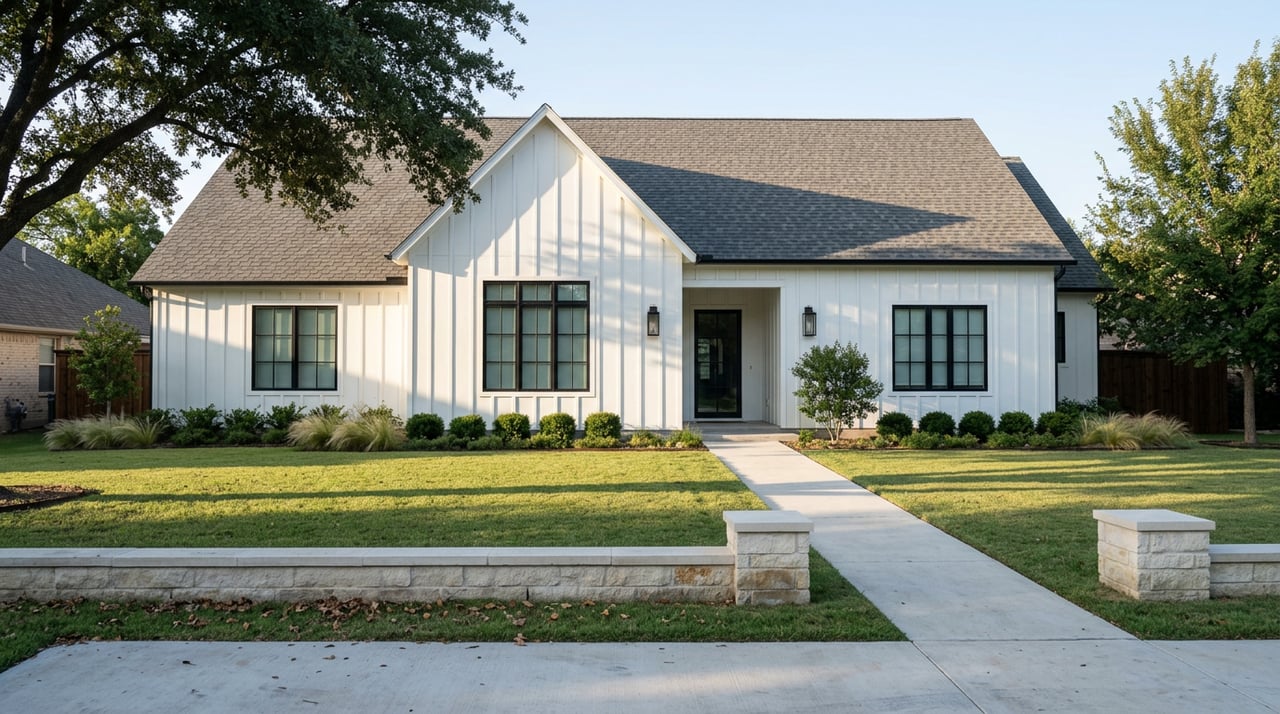
Why Canyon Springs Has More Than One HOA, and What That Means at Closing
September 17, 2026
September 17, 2026
A title company orders a resale certificate for a Canyon Springs address. The subdivision name on the plat says one thing. The management certificate on file with the state says something else. Now someone is on the phone trying to figure out which association actually governs this lot, while the closing date sits a week out and won't move.
This happens more often in Canyon Springs than the marketing suggests. The name reads like a single, cohesive neighborhood, and in a lot of ways it is: about 1,200 homes spread along a two-mile stretch of Canyon Golf Road, sharing a park, an Olympic-size pool, tennis and basketball courts, and a pavilion. But "Canyon Springs" isn't one governing entity. It's a name that sits over more than one legally separate homeowners association, and knowing that before you're deep in a transaction saves real time.
The core association, Canyon Springs Homeowners Association, is registered as a property owners' association with the Texas Real Estate Commission and files its management certificate publicly through hoa.texas.gov. It covers the general Canyon Springs subdivision in Bexar County, ZIP 78258.
But at least one section inside the same branded community, The Mesas and Ridge at Canyon Springs, filed its own separate management certificate with the state in 2024. That's a different legal entity with its own governing documents, its own board, and potentially its own dues structure, reserve fund, and rules, despite carrying the Canyon Springs name on the sign.
This is the part a buyer moving from a single-HOA subdivision doesn't expect. In most neighborhoods, the community name and the HOA name are the same thing. In Canyon Springs, they can diverge, and the only way to know for certain which entity governs a specific address is to check the recorded deed restrictions and the management certificate tied to that lot, not the name on the subdivision sign at the entrance.
Once you know which association holds jurisdiction, the resale process has real, quotable numbers attached to it. The main Canyon Springs Homeowners Association lists a resale certificate fee of $250 and a transfer fee of another $250, figures that come from the association's own published data rather than a rumor passed between agents. Those two line items alone add up to $500 that shows up in a typical Canyon Springs closing, on top of whatever title and escrow fees a buyer or seller expects elsewhere.
What the source doesn't guarantee, and what a seller shouldn't assume, is that every section of Canyon Springs charges the same amount. A separately filed association like The Mesas and Ridge sets its own fee schedule. If a listing agent orders documents from the wrong HOA, or assumes a flat fee across the whole community, the request comes back rejected or wrong, and that's lost days during an option period that's already ticking.
The safest move, and the one worth asking a title company to confirm in writing, is which specific association governs the address in question before ordering anything. Current fee amounts should always be confirmed directly with the managing association rather than assumed from a prior sale in the same zip code, since these figures can shift and the association itself is the only reliable source once you know which one applies.
| What's consistent across Canyon Springs | What can differ by section |
|---|---|
| General location, north of Loop 1604 and west of Highway 281, roughly 25 to 30 minutes from downtown | Which HOA or POA actually holds jurisdiction over a given lot |
| Shared community amenities: park, pool, tennis and basketball courts, pavilion | Resale certificate and transfer fee amounts |
| The Canyon Springs Golf Club running through the community | Gate access, guard-gated versus keypad or remote entry versus roving patrol only |
| The overall subdivision name used in marketing | Reserve fund health and assessment history behind that name |
Part of why this catches people off guard is that Canyon Springs markets itself, understandably, as a collection of distinct enclaves: San Miguel, The Estates, The Trails, The Reserve, The Waters, The Links, and The Villas among them. The Estates in particular turns up in listings as a guard-gated entry point, while other sections rely on keypad or remote access, and a few aren't gated at all but fall under the association's roving security patrol instead.
That variation in physical access mirrors the variation in governance. A guard-gated section with its own private roads and its own separately filed HOA is a different legal and financial arrangement than a keypad section still under the main Canyon Springs Homeowners Association. Buyers touring homes across a few of these sections in one afternoon can reasonably assume they're comparing apples to apples on HOA terms. They aren't always.
For a seller, the practical step is to confirm which association governs the property early, ideally before the home goes on the market, so the resale certificate request goes to the right place the first time. That means pulling the recorded deed restrictions for the specific lot, not relying on the subdivision name used in the listing description, and reaching out to that association directly for the current fee schedule and any outstanding assessments.
For a buyer, the same due diligence applies during the option period. Ask for the governing documents, the reserve fund statement, and the assessment history from the actual HOA on file for that address, not a generic "Canyon Springs HOA" packet that may not apply to the section in question. If a listing sits within a separately filed association like The Mesas and Ridge, that distinction should surface in the seller's disclosure and the title commitment well before closing day, not as a surprise during the final walkthrough.
None of this changes what draws people to Canyon Springs in the first place: the golf course setting, the tree cover, the sense of privacy that comes with gated or patrolled sections. It does mean that the paperwork behind that setting is more layered than a single HOA name suggests, and a buyer or seller who treats "Canyon Springs" as one governing structure is working from an assumption the property records don't actually support.
Does every home in Canyon Springs pay the same HOA dues? Not necessarily. Dues, resale certificate fees, and transfer fees are set by whichever association governs that specific lot, and at least one section, The Mesas and Ridge at Canyon Springs, operates under its own separately filed management certificate rather than the main Canyon Springs Homeowners Association.
How do I find out which HOA actually governs my address? Start with the recorded deed restrictions for the specific lot, then cross-reference the management certificate filed with the Texas Real Estate Commission through hoa.texas.gov. The subdivision name used in marketing materials isn't a reliable substitute for that record.
Does this affect the value of golf course frontage in Canyon Springs? It's a separate question from which HOA holds jurisdiction. Governance and fee structure affect the closing process and ongoing costs of ownership. Course frontage and lot position are a pricing question worth working through with someone who knows the neighborhood's recent sales.
If you're weighing a purchase or preparing to list in Canyon Springs, Rutter Realty Group can help confirm which association actually governs your address before it becomes a closing-week surprise. Schedule a Confidential Consultation to walk through the specific section, its HOA, and what that means for your timeline.
Stay up to date on the latest real estate trends.

Advisory-led representation focused on discretion, trust, and a flawlessly managed outcome.

RUTTER REALTY GROUP
DAVE RUTTER
(210) 850-4425
[email protected]
ADDRESS 1717 N LOOP 1604 E SAN ANTONIO, TX 78232