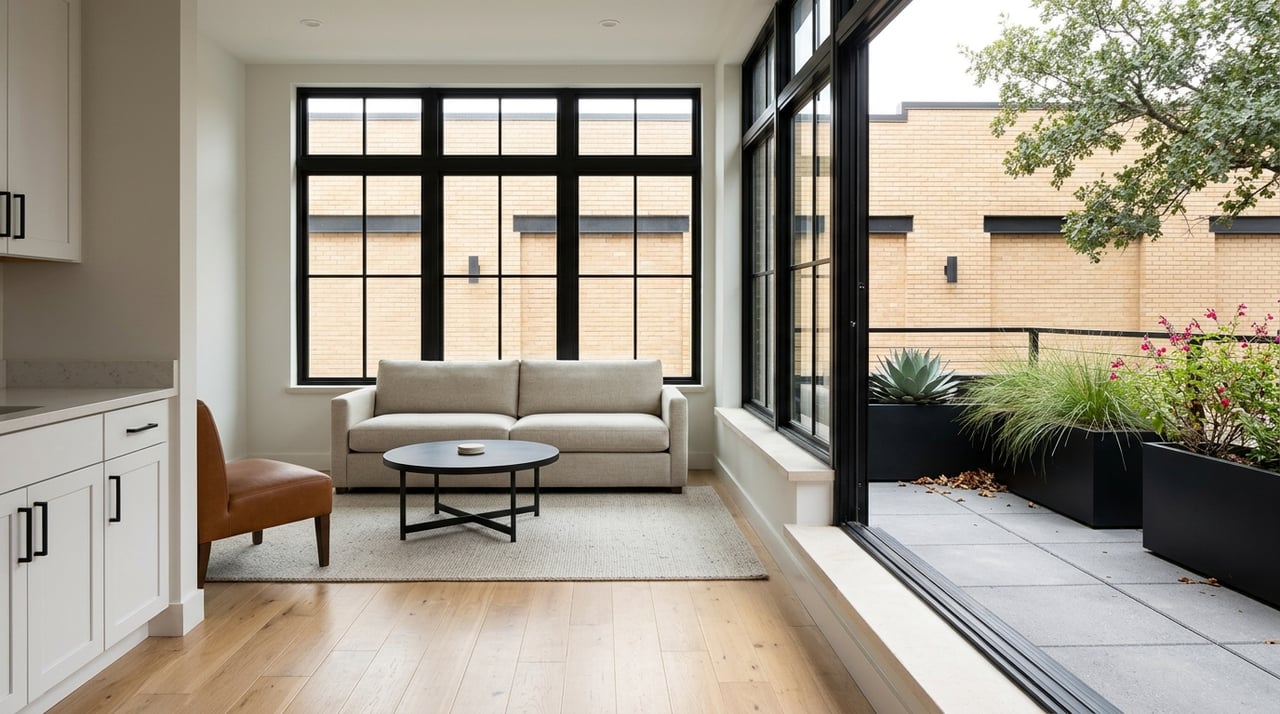
Is the Downtown San Antonio Lifestyle Right for You?
June 25, 2026
June 25, 2026
Downtown San Antonio can be easy to misunderstand. If you only think about the River Walk, you miss what it is actually like to live in 78205 day to day. For many residents, downtown is less of a visitor district and more of a compact urban neighborhood shaped by housing, parks, transit, and everyday routines. Let’s dive in.
In 78205, downtown is planned as a walkable center city with connected streets, neighborhoods, and transit. City design guidance describes a mix of residential, commercial, and recreational uses, with even some small single-family pockets in the northern part of downtown.
That matters if you are considering a move here. You are not just choosing a home near a major attraction. You are choosing an urban lifestyle built around shorter distances, active streets, and a denser pattern of living than you would find in yard-focused suburban neighborhoods.
Downtown is not one uniform block of towers and tourist stops. The area includes several different subareas, including edges shaped by the river overlay districts along the Arsenal and King William area and San Pedro Creek.
For you, that means the feel of downtown can change from one pocket to the next. One area may feel closer to civic buildings and cultural venues, while another may feel more residential or tied to park space and creekside improvements.
The housing story downtown is still evolving. Much of the current inventory is shaped by apartments, adaptive reuse projects, and mixed-use infill rather than large-lot detached homes.
Recent city-backed projects help show that direction. The Whitney at 425 Bonham was approved for conversion into a 220-unit residential community, and the city is also supporting rehabilitation of 63 apartment homes at 111 W. Travis.
Downtown design standards focus heavily on the pedestrian experience. They emphasize how buildings meet the street, how sidewalks function, and how ground floors support active use and transit access.
In practical terms, that usually means a denser, more urban environment. If you are moving from a suburban area, the shift is not just about home size. It is also about how your building, block, and daily routine connect to the street around you.
Living downtown often means mixing walking, transit, and selective car use. It is not best described as fully car-free, but it is also not built around driving everywhere for every errand.
Many everyday destinations are close together. A Walgreens operates at 300 E. Houston Street, and Historic Market Square offers more than 100 locally owned businesses for shopping, food, and quick trips.
City streetscape guidance treats walking as a core part of downtown life. Special paving can highlight transit stops, parks, plazas, and historic places, and the city’s parking tools are designed around the idea that you may park once and continue on foot.
That creates a different rhythm from more spread-out parts of San Antonio. You may find yourself combining errands, meals, and social plans within a short radius rather than making several separate drives.
Parking is one of the biggest practical differences downtown. Instead of relying on open curb parking everywhere, downtown uses a managed system of garages, lots, meters, and digital tools like the SAPark app.
That can feel like an adjustment at first, especially if you are used to easy driveway parking. Still, the system is designed to make an urban routine workable, and residents in designated downtown zones can apply for residential parking permits in areas such as North Flores, Arsenal, Lavaca, and Perry Court.
VIA operates seven days a week on 75 routes, with downtown stops clustered around Travis Park, Main Plaza, the Alamo, and the VIA Downtown Information Center. Late-night lineup buses also depart at 10:30 p.m., 11:30 p.m., and 12:30 a.m.
For added convenience, Prímo 100 runs daily between Centro Plaza, Ellis Alley Park & Ride, and the Medical Center Transit Center, with 15-minute peak service. VIA Link also serves a Downtown zone with on-demand service and transfer points at Centro Plaza and Ellis Alley.
One of downtown’s strongest livability features is its network of public spaces. These are not just places to pass through. They help shape how residents spend mornings, afternoons, and weekends.
Main Plaza includes benches, picnic tables, restrooms, a bike rack, and a water feature. Yanaguana Garden at Hemisfair is open daily from 5 a.m. to midnight and includes accessible play equipment, a splash pad, and evening lighting.
San Pedro Creek Culture Park gives downtown another kind of outdoor experience. It combines public art, native landscaping, historic preservation, and flood-control design along the western edge of downtown.
For residents, that means outdoor space does not look the same everywhere. Some public areas feel civic and open, while others feel more linear and reflective, tied to the creek and its design features.
Travis Park remains another core downtown park, and city guidance treats parks and plazas as part of the pedestrian network. That is an important detail because it shows how outdoor spaces are woven into everyday movement, not set apart from it.
If you enjoy walking, meeting friends outdoors, or breaking up your day with a short stroll, this network can be a real advantage. It supports the idea that downtown life happens between destinations, not just inside them.
Living downtown also means living close to a dense lineup of cultural spaces. The Tobin Center includes a 1,738-seat hall and an outdoor River Walk Plaza used for concerts, film events, fitness programming, and receptions.
Market Square adds another layer with locally owned businesses, live entertainment, dancing, and family-oriented events. San Fernando Cathedral, located at 231 W. Commerce, remains one of downtown’s most recognized civic and historic landmarks.
The Alamo may be the best-known landmark, but everyday downtown life is also supported by the Downtown Public Improvement District. That district funds maintenance, beautification, landscaping, hospitality ambassador services, and year-round programming.
For you, that can be a major benefit. It helps keep downtown active and cared for, though it also means some blocks may feel busier during events, peak visitor times, or special programming.
Every neighborhood choice comes with tradeoffs, and downtown is no different. In 78205, the two biggest factors are usually parking management and event-driven activity.
If you want a quieter, highly private setting with more separation between home and public life, some downtown locations may feel more active than you prefer. On the other hand, if you value access, convenience, and a lively public realm, those same features may be exactly what draws you in.
Downtown can make sense if you want:
It may be less ideal if you want:
Downtown San Antonio is not a one-note place, and that is exactly why good guidance matters. Two homes may both have a 78205 address, yet offer very different day-to-day experiences depending on block pattern, parking setup, park access, and proximity to activity hubs.
If you are comparing downtown living with nearby neighborhoods, it helps to look beyond price and square footage. You also want to understand how your routine would work there, from errands and transit to weekends and parking.
A local advisor can help you narrow that picture quickly. If you want thoughtful guidance on whether downtown San Antonio fits your goals, connect with David Rutter for a confidential conversation.
Stay up to date on the latest real estate trends.

Advisory-led representation focused on discretion, trust, and a flawlessly managed outcome.
RUTTER REALTY GROUP
DAVE RUTTER
(210) 850-4425
[email protected]
ADDRESS 1717 N LOOP 1604 E SAN ANTONIO, TX 78232